skip to main |
skip to sidebar
 From Dad:
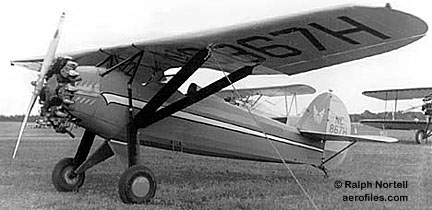
It looks like there is another Speedmail next to it. I think it was a company in the East that specialized in making planes to haul airmail. For years Air Mail was the key to commercial air transportation. Getting an air mail route was the way to get an airline started. United got started by buying up airmail routes from SFO to NY through what is now ORD, but was then the Midway airport, practically down town Chicago. But it is still there and I believe Southwest still operates from there! When I started with UAL in '49, I was based there.
Slim does that little teddy bear thing next to the N strut mean anything to you. It seems I have seen it somewhere...
 From Dad: I have to tell you I have no idea.. It may have some Fairchild in it. Better see if Slim can cope with it! I would like to know myself. It might be a Warner engine. Did I ever identify any planes or airports on the note space of the metal cartridges? From Slim: Your recent letter. It's very definitely a Davis D-1. They came with several different engines This one resembles a LeBllond but the last one I saw had a Warner. This picture is interesting. The large hill in the background is different for an airport...
My Notes:
I've found a couple links to the Davis D1.
I also found this picture of a Davis V-3 that looks like it might just be the same plane.I also found another picture that Dad took of the same plane:

 Oh yes! I think the red biplane is a Rose Parakeet. It is a very old design. I had read about them when I was in High School. Once Slim and I went down to Denver and sneaked over to the General Aviation hanger at Stapleton Field and saw the first one. I could have killed for one!
I have no idea how many are left but Paul Merritt has one. The one Paul has has been ground looped several times. It is pretty short coupled and could easily want to swap ends in a cross wind. There is a fellow that comes to Bartlesville all the time and has built several of them. There are usually several at the Biplane show in late summer. I could go on and on about Parakeets! Come to think of it there is someone making them down in NM or Ariz.
From Slim:
Doug Rhineheart of Farmington NM did get the mfg rights and did make a few and also sold plans so several we built. Jack Grierner has one here and is for sale
The original ones like you say were mfg in Chicago with 40 hp in middle or late 1937.
Most of he later built ones had 85, 90 or 100 hp All were strut braced no flying wires similar to cabin Wacos I would guess a good portion of them have been ground looped. Other than that I think they were a great little plane.
The gent in the Tulsa that Ron and I knew of and saw to it that both airplanes made it to Bartlesville named the Ramblin Rose and Second Hand Rose. I used magnifying glass on the vertical fin on this one. All I can make out is maybe three words on top in an arc on top and Parakeet on the bottom This might be Second Hand Rose.
 My guess is that it is a C5. Most are labeled C5A now. That is a USAF cargo plane somewhat larger than a Boeing 747. Like most all cargo planes of the Airforce they are designed to land on soft ground so it has a lot of wheels.They are really big planes. Up at the top of the fuselage behind the wing there is a passenger section with 87 airline type seats. It looks like you are walking onto a 727!
The cargo section looks like a barn or a huge gymnasium. It can hold most things the Army would need to transport. When I was making OSH I knew a gal who was a Loadmaster on one of these hummers. She alluded to it having a very long range as well as a large payload. It was loaded from a clamshell door in the front (nose) of the plane. Vehicles can drive right into the plane. There is a long ramp to drive tanks and other vehicles on and off the plane.
I have no idea what it's performance really is. It has a crew of three. Two pilots and the Loadmaster. Or so I have been told. I do not remember when it first came on the scene, but it is quite old. It has had several modifications. A real major one involved a wing modification (I think this was what made it a C5A).
It has also had several engine upgrades. But it is still a backbone of the USAF long range cargo fleet. Once when I was flying to Okinawa there was one on the field and we talked the crew into giving us a tour. They were still classified at that time. It is the only one I have ever been close to.
 From my Dad:
I will say however that I really know nothing about it except from appearances. I cannot even identify what or who made it. Since it is a relatively large plane for a two seater I am guessing it was built for racing - probably in the mid to late thirties.
The engines appear to be 4 cylinder inverted in line engines. From a process of elimination. That does not help much. They could be Menascos, or Gypsy Moths. The industry went through a period of 'in line' engines having less frontal drag of the airplane -- versus a radial. There are only two basic ways to dissipate the heat generated by internal combustion engines. It is either air, liquid, or air and liquid. Something must cool the liquid before it all boils away. The problem with in line cooling are the rear cylinders. They always tend to overheat.
This plane looks a little Englishy to me and I would guess it has Gypsy Moth engines, which were made in England. I might suggest you invite Slim Beegles and send him a pix of the plane. I think this is something he might enjoy.
From Dad's friend Slim:
The airplane is the de Havilland Comet. I think a one of a kind built solely for the London to Melbourne race which had world participants. I think the US entered a Douglas maybe a DC-2 because of the early date of the race. I think maybe Roscoe Turner was the US pilot.
The Comet won the race. Then too the G on the registration number is for England. The British used the Gypsy engines for years.
I have know idea about the location however that is a Cessna P-210 off the left wing of the Comet. That really doesn't say either.
This race came about in the early or mid 1930's. I hope the airplane is still around someplace and in a museum.
My notes:
Wikipedia refers to this plane as the de Havilland DH.88 Comet and contrasts it with the de Havilland Comet jetliner. The picture on the site is eerily similar to Dad's picture above: The reason is of course that the "Grosvenor House" is as Slim said, the plane that participated in the race from England to Melbourne Australia. It sounds like there is a very authentic replica built in 1993 as well as the original which is housed in the Shuttleworth Collection in England.
One final note. The race in question - the MacRobertson Trophy Air Race of 1934 - included a female entrant from the United State: Jackie Cochran who went on to found the Women's Air Service Pilots of which my Mom was a member. Amazing!


 Posts
Posts